Sunday, August 08, 2010

The First Tactical Battalion Battle-Group Amphibious Exercise

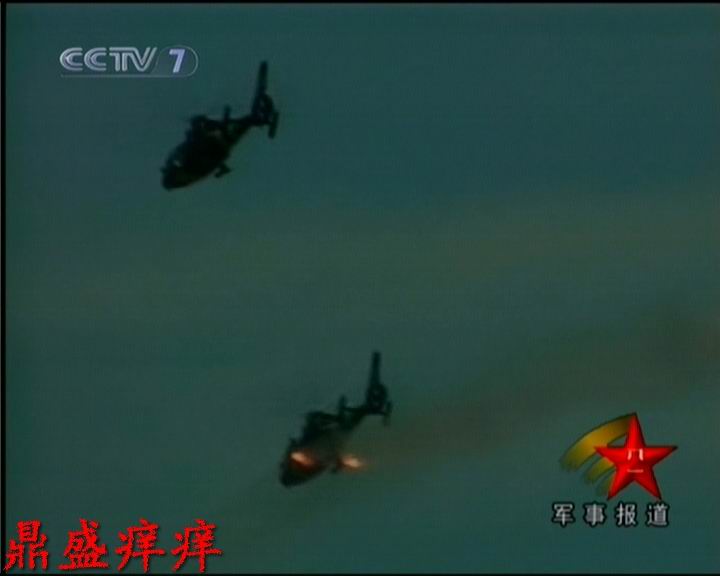
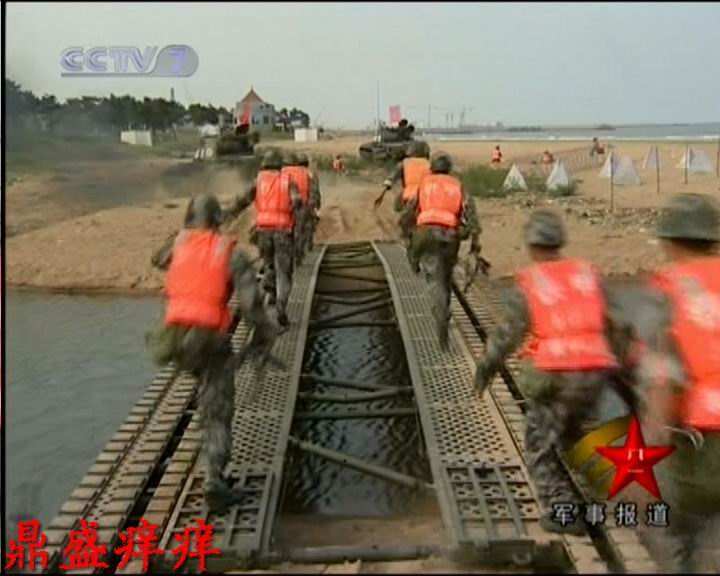
During the past few days, the Vanguard 2010 Air Defense Drill is getting a great deal of media attention (here). At the same time the PLA conducts a more military significant exercise that deserves more coverage -- the first amphibious assault by a PLA Joint Tactical Battalion Battle-Group.

The participating battalion is from the Jinan Military Region instead of the amphibious warfare focused Nanjing and Guangzhou MRs. Together with the fact that they are exercising with older equipments rather than the newer organic amphibious assets already found on their front-line amphibious units signifying that the PLA is still testing/refining their battle-group concept.






Saturday, August 07, 2010

15th Airborne's 5000 meters HALO jump

According to today's CCTV, the Military Free Fall(MFF) for a 5000 meters HALO is so lengthy that this trooper has time to take some cell-phone photos.


One man's trash


HQ-12 on display at the China aviation museum in Beijing.


Thursday, August 05, 2010

The "Assembled-In-China" Mi-171

A follow-up on my previous blog entry on the Sino-Russian Mi-171 joint venture (here). In additional to civilian service, it seems that the Chinese assembled Mi-171 has entered service with the PLA 2nd LH regiment, 13th Group Army, Chengdu MR.


Wednesday, December 16, 2009
Update on the Mi-171 helicopter joint venture.
1st pair of the domestically assembled Mi 171 helicopters delivered to Qingdao Helicopter Aviation Company today.

China starts producing Russian Mi-171 helicopters - paper
10:57 12/05/2008

http://en.rian.ru/russia/20080512/107127123.html

MOSCOW, May 12 (RIA Novosti) - A manufacturing plant in southwest China has started to assemble Russian-designed Mi-171 transport helicopters, one of Russia's key arms exports, the Russian business daily Vedomosti said on Monday.
....
....
....


Helicopter hedgehops through Yarlung Zangbo Grand Canyon for first time

(Source: PLA Daily) 2010-08-06

On the eve of the Army Day of the Chinese People’s Liberation Army (PLA) which falls on August 1, two helicopters of an aviation regiment of the air force under the Chengdu Military Area Command (MAC) of the PLA hedgehopped through the Yarlung Zangbo Grand Canyon for the first time, filling in many gaps of this type of helicopter of the PLA Air Force in flying in mountainous area, landing on hilltops and flying in valley as well as comprehensive maintenance support in the area of the Yarlung Zangbo Grand Canyon.

  The Yarlung Zangbo Grand Canyon is the largest canyon in the world. Its total length is 504.6 km with an average depth of 2,268 meters. The deepest place of the canyon is 6,009 meters.

  The two home-made helicopters participating in the plateau training took off from an airfield in the west of China’s Sichuan Province and flew a long range to the canyon to have adaptability training on such highly difficult subjects as hovering, taking off and landing as well as field landing comprehensive flight during the maneuver by adopting the methods of gradually increasing altitude and weight. They overcame such 12 training difficulties as flight with full load and at high ceiling speed in plateau area in succession.

  The helicopter plays an important and irreplaceable role in the tasks of transporting materials, handling emergencies and searching and rescuing people on the snow-capped plateau. To verify the capability of this type of home-made helicopter in flying in plateau area and implementing combat tasks, the regiment obtained 1,000-odd valuable plateau flight data of the helicopter through this trial training.

  By Zhang Fengqiang and Hu Xiaoyu

Editor:Cui Xinwen


Golf Class SSB "Great Wall 200" is now awarded with a unit citation.

Hu Jintao signs order to award two units and one individual honorary titles

(Source: PLA Daily) 2010-08-05

  Hu Jintao, chairman of the Central Military Commission (CMC) of the People’s Republic of China, recently signed an order to award two military units and one individual the honorary titles.

  The title of “Vanguard Submarine of Underwater Launching Test” was awarded to the Great Wall No. 200 Submarine. The Great Wall No. 200 Submarine of the Navy of the Chinese People’s Liberation Army (PLA) was put into underwater service in September 1964 and successfully launched the carrier rocket underwater for the first time in 1982. It created multiple records including the record of the longest service life and the record number of missile-launching in the submarine history of the PLA Navy.

[deleted none-PLA related awards]
.........
.........

Editor:Chen Jie

Wednesday, August 04, 2010

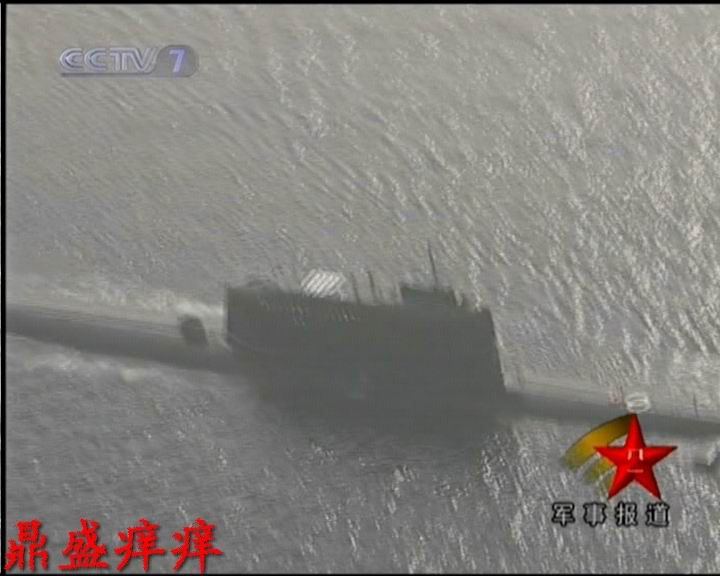
The Golf class SSB is alive, alive!


My previous Golf Class SSB blog entry (here) Monday, October 12, 2009
Latest photo of the Golf class
Back in July 2009, I blogged about the lone PLAN Golf class conventionally powered ballistic missile submarines (SSB) under refit. It was sporting a new set of screws and a fresh paint job. (here) Looks like the refit has been completed and it is currently floating right outside of the Lushun Naval Yard.

According to today's CCTV, it is now back to PLAN's orbat and performing the role of a missile testbed.

You can watch the CCTV report (here)


Naval flight-cadets graduate from naval flight academy

Interesting.... the PLAN-AF is moving from just land-based to "something else"

Naval flight-cadets graduate from naval flight academy

(Source: PLA Daily) 2010-08-04

  In late July, the first batch of fighter flight-cadets independently cultivated by the Navy of the Chinese People’s Liberation Army (PLA) graduated from the Flight Academy of the PLA Navy and formally shifted to an aviation unit of the PLA Navy to receive combat flight modification training.

  Due to the inadequacy of the training capacity, the fighter pilots of the aviation force of the PLA Navy were cultivated by the PLA Air Force for a long period of time. But as the combat and training tasks undertaken by the PLA Navy and the Air Force are different, the adaptation cycle for the flight-cadets was quite long after they were assigned to the naval troops.

  In 2005, the Flight Academy of the PLA Navy started to cultivate its fighter pilots independently and established the fighter pilot training institution. In less than one year, the academy realized such three strides as establishment, modification and undertaking training.

  By Wu Deji and Qian Xiaohu

Editor:Chen Jie

Tuesday, August 03, 2010

J-11 Over Tibet.

The PLAAF is training its J-11s from the 97th Regiment, 33rd Fighter Division, ChangeDu Air Force, over Tibet for the first time in its history.  Some might find it hard to believe, but there is no permanent PLAAF unit commissioned in Tibet and the PLAAF has never exercised it's modern fighter fleet over that region until now. Most of the J-7s found in the Lhasa-Gongar airport were rotated in from elsewhere on a per tour basis. However, at a time of crisis, the Chinese military could transport its military assets via the newly constructed Qinghai-Tibet Railway.


PLA G3 fighters in training over plateau

(Source: PLA Daily) 2010-07-30

Confrontation exercise

On July 27, the third-generation (G3) fighters of the PLA performed the live-shell patrol task for the first time over the plateau with a field occupation time of 8 hours, breaking a path of highly intensive training over the plateau, full load support and limit-challenging flight for the new type of fighters.

Since March this year, the officers and men of an aviation regiment of the air force of the Chengdu Military Area Command (MAC) were ordered to enter a plateau airport in Southwest China to conduct field bivouacked training, organize flights in complicated meteorological conditions, tactics and fighting method exploration flights and extreme performance property testing flights under plateau conditions as well as high-altitude flights training in the new-type fighters under the conditions of low oxygen content and poor fighter maneuverability, in a bid to effectively improve the troops’ combat ability under special plateau conditions.

Currently the proportion of the tactical training of the regiment in the field bivouacked training over the plateau stands at 80%.

By Li Dengke and Liu Yinghua


PLA Air Force important combat readiness materials transported to Tibet by railway

(Source: PLA Daily) 2010-08-03

In mid summer, a train loaded with important combat readiness materials of the Air Force of the Chinese People’s Liberation Army (PLA) got to the destination safely via the Qinghai-Tibet Railway.

According to a leader of the Military Transportation Department of the Logistics Department of the PLA Air Force, this is the first time for his Military Transportation Department to organize combat readiness materials to be transported to Tibet by railway since the Qinghai-Tibet Railway opened to traffic, symbolizing a new improvement of the military transportation capacity of the PLA Air Force in combat support.

As the average altitude of the Qinghai-Tibet Railway is above 4,000 meters, the transport guards are apt to cause altitude reaction sickness. To ensure the safety of the transportation, the Military Transportation Department of the PLA Air Force dispatched personnel to command in the forefront and follow the whole transportation process as well as participate in reinforcing, binding and inspecting materials on the way.

To ensure transportation safety of important combat readiness materials, the officers and men of the Military Transportation Department of the PLA Air Force immediately examine the safety state of the train each time when the train stops at the stations along the Qinghai-Tibet Railway. They also persist in summing up experience after traveling for some distance, so as to adjust and improve the preplans for the following actions. During the stop process of the train, the security sentinels always keep a close watch, so as to ensure the important combat readiness materials to be transported to the destination safely.

By Jiang Jiuhong and Luo Cheng

Editor:Zhang Qingxia

Monday, August 02, 2010

The Latest Hainan Class Mod.

Old Soldiers never die, they just fade away to become training ships for the China Marine Surveillance (MSA) (here)

While it is no longer in front line naval service, the Hainan class' simple and yet effective design is still preferred by the Chinese. In addition to this MSA conversion, they surely will find more ways to keep this reliable class of ship around.

My Hainan class article (here)


Vanguard-2010 military exercise

China to Launch Military Exercise in Central Provinces
2010-08-03 00:50:34 Xinhua Web Editor: Zhang Xu
http://english.cri.cn/6909/2010/08/03/2021s586330.htm

A total of 12,000 soldiers and officers from China's air defense force are scheduled to conduct a five-day military exercise in two provinces from Tuesday, a source from the the People's Liberation Army (PLA) Jinan Military Command said Monday.

The military exercise, code-named "Vanguard-2010", will be carried out in the provinces of Henan and Shandong and is an important part of annual joint military exercises between different military commands, according to the source.

An unidentified number of scouting planes, combat aircraft and helicopters will join the exercise, according to the source.

Sunday, August 01, 2010

Long March launches fifth GPS satellite for China


August 1st, 2010 by Rui C. Barbosa
http://www.nasaspaceflight.com/2010/08/long-march-launches-fifth-gps-satellite-for-china/

China launched its fifth satellite as part of its GPS satellite navigation system, with BeiDou-2 IGSO-1 placed into orbit via the CZ-3A Chang Zheng-3A (CZ3A-17/Y16) launch vehicle. Launch from the Xi Chang Satellite Launch Center, in Sichuan Province occured at 5:30am local time on Sunday.

Chinese Launch:

The satellite that was launched is the first BeiDou-2 IGSO (Inclined GSO) satellite of the system. This constellation of satellites will eventually consist of 35 vehicles, including 27 MEO satellites, 5 GSO satellites and 3 IGSO.

The satellites will transmit signals on the following carrier frequencies: 1195.14-1219.14MHz, 1256.52-1280.52MHz, 1559.05-1563.15MHz and 1587.69-1591.79MHz, notably overlaying the Galileo PRS band and the GPS M-code.

According to International Telecommunications Union (ITU) regulations, the frequencies have to be used within a certain time period. The priority for using the frequencies is given in order of reception of the requests at ITU, made seven years in advance.

The BeiDou-2 was developed in the basis of the DFH-3 satellite platform and has a lifespan of 8 years.

The Compass Navigation Satellite System (CNSS) is China’s second-generation satellite navigation system capable of providing continuous, real-time passive 3D geo-spatial positioning and speed measurement.

The system will initially used to provide high-accuracy positioning services for users in China and its neighboring regions, covering an area of about 120 degrees longitude in the Northern Hemisphere. The long-term goal is to develop a global navigation satellite network similar to the GPS and GLONASS.

Like their American and Russian counterparts, CNSS will have two types of services; a civilian service that will provide an accuracy of 10 meters in the user position, 0.2 m/s on the user velocity and 50 nanoseconds in time accuracy; and the military and authorized users service, providing greater accuracy.

The first phase of the project will provide for the coverage of the Chinese territory, ahead of the future use of the Compass constellation for the entire globe.

Previous BeiDou satellites were launched on October 30, 2000 ‘BeiDou-1A’ (Catalogue Number: 26599 International Designation: 2000-069A); December 20, 2000 ‘BeiDou-1B’ (26643 2000-082A); May 24, 2003 ‘BeiDou-1C’ (27813 2003-021A); February 2, 2007 ‘BeiDou-1D’ (30323 2007-003A); April 13, 2007 ‘BeiDou-2 Compass-M1′ (31115 2007-011A); April 14, 2009 ‘BeiDou-2 Compass-G2′ (34779 2009-018A), January 16 ‘BeiDou-2 Compass-G1′ (36287 2010-001A) and June 2, 1010 ‘BeiDou-2 Compass-G3′ (36590 2010-024A).

China used their CZ-3A Chang Zheng-3A launch vehicle to loft BeiDou-2 IGSO-1 uphill. The CZ-3A is a large-scale three-stage liquid launch vehicle, which has inherited the matured technology of the CZ-3 Chang Zheng-3.

An upgraded liquid hydrogen and liquid oxygen cryogenic third stage has been developed to enable CZ-3A performing greater geostationary transfer orbit (GTO) capability. The CZ-3A is equipped with a more flexible and sophisticated control system which supports substantial attitude adjustments to orient the payloads before spacecraft separation and provides adjustable satellite spin-up rotation rate.

It has paved the way for the development of CZ-3B Chang Zheng-3B and CZ-3C Chang Zheng-3C, and become the workhorse of GTO launches for China.

The CZ-3A can also be used for LEO, SSO and polar orbit missions, as well as dual-launch and multiple-launch missions. The launch capacity of the CZ-3A to GTO is 2.650 kg, the lift-off mass is 241.000 kg, the overall length is 52.5 meters, the diameter of first stage and second stage is 3.35 meters, the diameter of third stage is 3.0 meters, and the maximum fairing diameter is 3.35 meters.

The first stage and second stage of CZ-3A employ storable propellants, i.e. unsymmetrical dimethy1 hydrazine (UDMH) and nitrogen tetroxide (N2O4), and the third stage uses cryogenic propellants, i.e. liquid hydrogen (LH2) and liquid oxygen (LOX).

On the first stage, the CZ-3A uses a DaFY6-2 engine with a 2961.6 kN thrust, while the second stage is equipped with a DaFY20-1 main engine (742 kN) and four DaFY21-1 vernier engines (11.8 kN each). The third stage is equipped with two YF-75 engines (78.5 kN each).

The fairing diameter of the CZ-3A is 3,35 meters and has a length of 8.89 meters.

CZ-3A consists of rocket structure, propulsion system, control system, telemetry system, tracking and safely system, coast phase propellant management and attitude control system, cryogenic propellant utilization system, separation system and auxiliary system, etc.

The CZ-3A has a 100 percent launch success rate since its maiden flight on February 8, 1994 when it successfully launched two experimental satellites. And it was awarded the ‘Gold Launch Vehicle’ title by China Aerospace Science and Technology Corporation in June 2007.

China used a CZ-3A to successfully launch the Chang’e-1 lunar satellite on October 24, 2007, which indicated that has taken a substantial step for lunar exploration.

This was the 125th successful Chinese orbital launch, the 124th launch of a Chang Zheng launch vehicle, the 54th successful orbital launch from the Xi Chang Satellite Launch Center, the third successful orbital launch from the Xi Chang in 2010 and the fifth successful orbital launch from China in 2010.

The Xi Chang Satellite Launch Centre is situated in the Sichuan Province, south-western China and is the country’s launch site for geosynchronous orbital launches.

Equipped with two launch pads (LC2 and LC3), the centre has a dedicated railway and highway lead directly to the launch site. The Command and Control Centre is located seven kilometers south-west of the launch pad, providing flight and safety control during launch rehearsal and launch.

Other facilities on the Xi Chang Satellite Launch Centre are the Launch Control Centre, propellant fuelling systems, communications systems for launch command, telephone and data communications for users, and support equipment for meteorological monitoring and forecasting.

The first launch from Xi Chang took place at 12:25UTC on January 29, 1984, when the CZ-3 Chang Zheng-3 (CZ3-1) launched the Shiyan Weixing (14670 1984-008A) communications satellite into orbit. The launch of the new BeiDou-2 satellite was the 52nd successful orbital launch from Xi Chang.

720,000 militiamen and reservists mobilized to join the PLA troops and armed policemen in flood-fighting

PLA Daily 2010-07-30
http://eng.chinamil.com.cn/news-channels/china-military-news/2010-07/30/content_4269863.htm

  Since the beginning of the flood season, China has seen frequent occurrence of unexpected extreme disastrous weather, as a result of which floods have attacked a multiple of provinces and autonomous regions.

The troop units of the Chinese People’s Liberation Army (PLA) and the Armed Police Force (APF) stationed in the flood-hit areas unswervingly implement the decisions and instructions of the Central Committee of the Communist Party of China, the Central Military Commission (CMC) and President Hu Jintao, who is concurrently chairman of the CMC, and make all-out efforts to plunge into the flood-fighting and disaster relief operations.

  The General Staff Headquarters (GSH) and the General Political Department (GPD) of the PLA issued a circular on July 29, reading that up to July 25, the PLA and APF servicemen totaling 331,000 persons/times have participated in the flood-fighting actions. They have evacuated 1.38 million people trapped by flood and resettled them.

  The military medical workers have made rounds of visits to and given treatment to 106,000 people.

  As a component of the Chinese armed forces, a total of 720,000 militiamen and reservists have also been mobilized to join the PLA troops and armed policemen in flood-fighting actions.

  The PLA and APF servicemen are the main force and vanguards in the operations against floods especially in controlling dangerous situations.

   According to the circular, all the PLA and APF units, especially those stationed in the flood-hit areas, are expected to act in close coordination with local governments and make concerted efforts with cadres and people in the flood-hit areas to win the battle of fighting against floods.

Editor:Ouyang Dongme

Anti-Ship Attack, PAP Style:


Floods devastating northeast China have killed at least 37 people and destroyed 25,000 homes, with the authorities racing to intercept vessels that broke their moorings.

http://www.google.com/hostednews/afp/article/ALeqM5g0PhnTb4o3duUzEmhpSNiZ8WZvWA