The Lynx 8×8 has become something of a familiar silhouette in PLA air‑assault units a with compact, muscular little vehicle that gives heliborne infantry the mobility they need the moment their boots hit the ground. For years, it accompanied PLA air‑assault brigades everywhere they went, not because it was glamorous, but because it was indispensable.
In the early days, though, getting a Lynx into the fight required a bit of improvisation. The Mi‑171, the workhorse helicopter inherited from earlier procurement, simply didn’t have the cabin space to swallow the vehicle whole. So the Lynx rode into battle hanging beneath the aircraft, suspended on sling cables like a stubborn mule that refused to fit through the barn door. It wasn’t elegant, but it worked and sling‑loading had its charms. If a helicopter ran into trouble, the crew could instantly jettison the load and claw back precious lift. And because the aircraft never had to land, a Lynx could be delivered to a clearing or a ridgeline in seconds, ready to roll the moment it touched the ground.
Still, everyone knew that internal carriage was the gold standard. Inside the cabin, cargo is sheltered from the elements, protected from windblast, rain, and the kind of temperature swings that can ruin electronics or medical gear. A helicopter carrying its load internally flies cleaner and faster, without the drag or pendulum‑like sway of a sling load tugging at its belly. Troops riding inside are buckled in, shielded, and far safer than they would be clinging to a vehicle dangling in the open air. And for pilots, an internal load is a blessing—no shifting center of gravity, no oscillation, no surprises.
There’s also the matter of visibility. A helicopter with a vehicle swinging beneath it is hard to miss. One carrying its cargo inside is just another aircraft in the sky.
All of this changed with the arrival of the Z‑8L. Its expanded cabin finally gave PLA air‑assault brigades something they had long wanted: the freedom to choose. Now a Lynx can ride inside the aircraft like a passenger or hang beneath it like before, depending on what the mission demands. Need speed, stealth, and protection? Load it internally. Need rapid drop‑off or maximum payload flexibility? Sling it.
The result is a force that can tailor its airlift to the moment more adaptable, more responsive, and far more capable than it was just a few years ago.


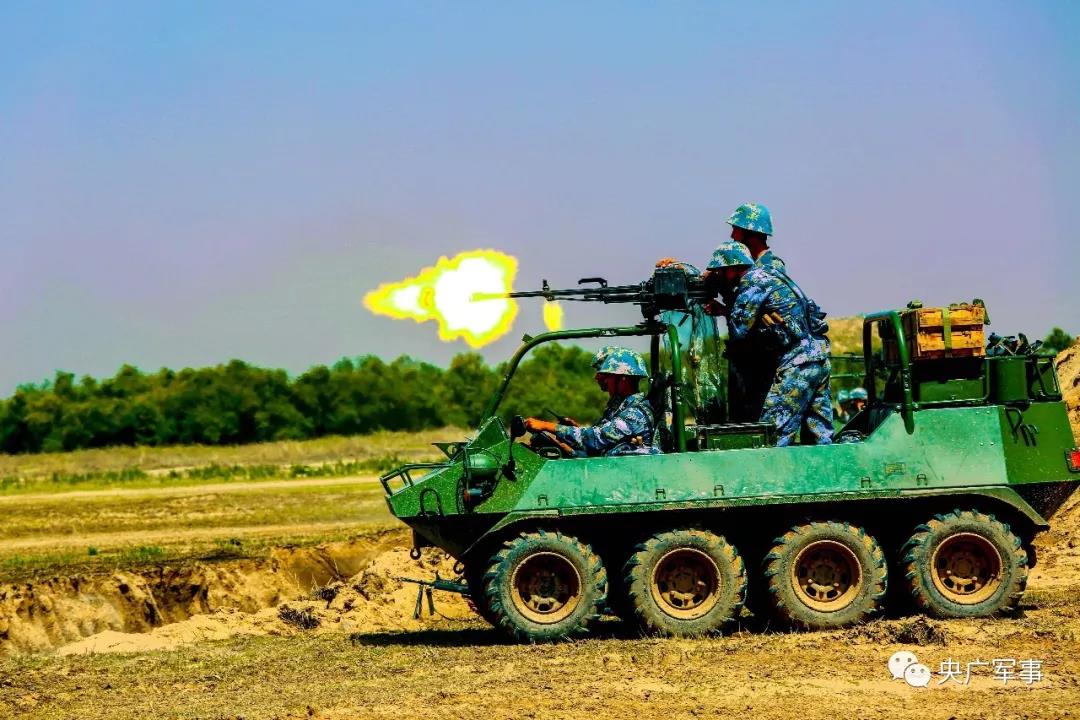
Photo released on Nov 24, 2018 by the PLAN WeChat account.




Thursday, April 12, 2018
5th PLAN Marine Brigade update (4/12/2018)
Photo credit goes to Andrew KC

Tuesday, January 09, 2018
The 5th PLAN Marine Briagde is here


No comments:
Post a Comment