Thursday, October 21, 2010

Rumor has it.

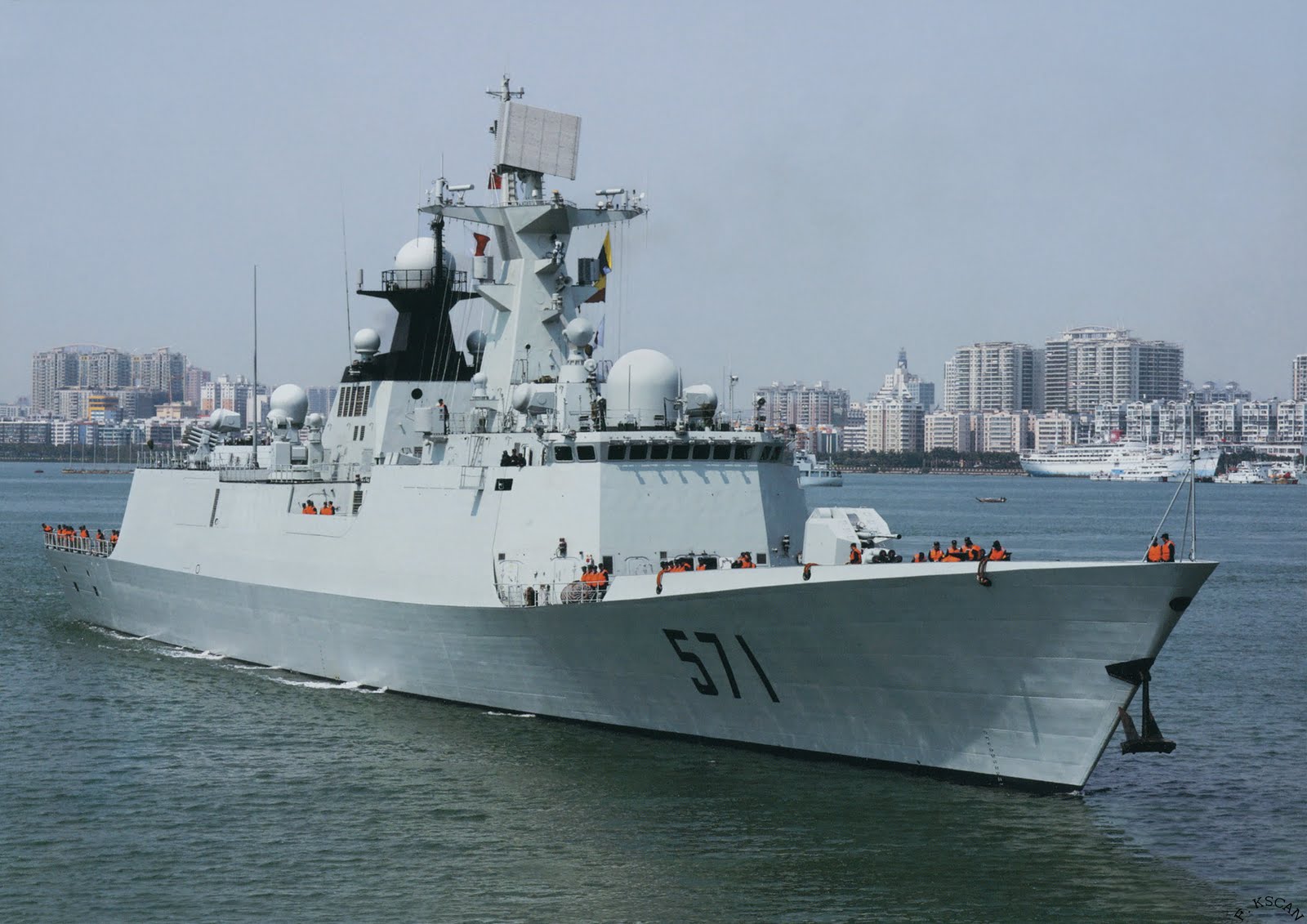
For whatever the reason, the PLAN does not like to place its imported warships under international spotlight and they seldom take part in foreign port calls. This is about to change -- rumor has it DDG 138 Taizhou (Russian Sovremenny class) might participate in the 7th PLAN task force to the Gulf of Aden.

138泰州舰将加入海军第七批赴亚丁湾护航编队 地方政府准备欢送

http://www.mztz.gov.cn/tzmzj/info.php?infos_id=3810


After a three year pause, two more newly constructed Type022 FAC spotted in Guangxi. It might be too early to tell, but rumor has it the Type 022 Houbei construction program has been restarted.


Wednesday, October 20, 2010

Cobra Gold With Chinese Characteristic?


PLA Marine Corps to conduct joint drill with Thai marines in Thailand

(Source: Xinhua) 2010-10-21

  BEIJING, Oct. 20 (Xinhua) -- The Marine Corps of the Chinese People's Liberation Army (PLA) will conduct a joint drill with their counterpart of Thailand, China's Ministry of National Defense said Wednesday.

  Called "Blue Assault-2010," the joint drill will take place in Sattahip, Thailand, from Oct. 26 to Nov. 14, a ministry statement said.

  The joint training exercise will be the first for the PLA marines, according to the statement.

  The joint drill will focus on anti-terrorism. It will also aim at helping marines from Thailand and China learn from each other, enhance mutual understanding, step up friendly exchange and cooperation in a bid to improve the capabilities of both countries' marine corps to handle new challenges and threats together.

Editor:Dong Zhaohui

My previous blog entry:

Thursday, December 17, 2009

Update on the Sino-Thailand "Cobra Gold" Military Exercise.

The Sino-Thailand "Cobra Gold" initiative was first reported by Robert Karniol back in February 2009. It was "officially" proposed to the Thai military last month during Defense Minister Liang Guanglie's visit.

According to the latest news, China has offered to pay for all of the proposed military exercises (here) It would be a diplomatic coup if China manages to conduct this exercise with Thailand maintaining balance between Beijing and Washington.


China gives war game invite
http://www.bangkokpost.com/news/local/28240/china-gives-war-game-invite
* Published: 28/11/2009 at 12:00 AM
* Newspaper section: News

China has invited Thailand to take part in an inaugural joint military exercise similar to the annual Thai-US Cobra Gold, a source says.

If such an exercise goes ahead, it could affect the balance of military power in the region to the detriment of the United States, a high-ranking military source said. As a result, Thailand's military must consider the impact of such an operation on its relations with both the US and China.

"Senior military officers are excited by this news. They are consulting about the matter," the source said. "But the armed forces are afraid that the US, which has jointly conducted the annual Cobra Gold exercise with Thailand for over 20 years, may be upset with China's proposal as it will affect its military power in the region."

China's Defence Ministry recently sent a letter proposing a joint military exercise between the two countries, said the source.

China's Defence Minister Liang Guanglie broached the issue with Thailand's permanent secretary for defence Apichart Penkitti when he made an official visit to China last month.

The proposal prompted Defence Minister Prawit Wongsuwon to have the permanent secretary set up a panel to study the pros and cons of holding such an operation with China, said the source.

Gen Prawit will communicate the ministry's decision to Mr Liang, when he comes to Thailand from Dec 1-3, after having visited North Korea and Japan to boost military exchanges, the source said.

Thailand's armed forces should seriously consider taking China up on its offer as the country is a major regional power. Thailand's military, particularly the navy, is also equipped with Chinese weapons, the source said.

Thailand's procurement of weapons from China and other countries has reduced the military's dependence on the US, which over the years has paid less attention to the country, said the source.

The Defence Ministry would likely agree in principle with China's proposal. However, talks on the budgets for the exercise and other details would be held later, he said.

PLA focusing on amphibious growth
Feb 23, 2009
By Robert Karniol, Defence Writer

http://www.straitstimes.com/vgn-ext-templating/v/index.jsp?vgnextoid=2db5caedb6e9f110VgnVCM100000430a0a0aRCRD&vgnextchannel=0162758920e39010VgnVCM1000000a35010aRCRD

THE Chinese People's Liberation Army (PLA) is again seeking foreign support to strengthen its capabilities in amphibious operations after suffering rejections by at least two potential partners.

The current initiative involves a PLA proposal to conduct a bilateral training exercise with the Royal Thai Marine Corps (RTMC), with talks ongoing. The discussions have been kept confidential due to political sensitivities but sources in both the RTMC and the Royal Thai Navy have independently confirmed that they are taking place.

'We are concerned about how this might affect relations with the US Navy (and US Marine Corps),' a Thai source told The Straits Times. He nevertheless acknowledged that an RTMC delegation is soon due to visit China for further deliberations.

Amphibious military capabilities have application in disaster relief and humanitarian operations but they are designed mainly for complex combat assault missions launched from the sea. The latter are vital in the projection of military power in areas distant from home territory. In China's case, the capability would be particularly important in a full-scale conflict with Taiwan.

The PLA has traditionally had limited amphibious capabilities but is emphasising their expansion. Unusually, this effort is focused largely on regular ground forces rather than on the marines.

The PLA navy's marine corps element was doubled in 1998, growing to two brigades, but its total personnel still number only about 10,000. However, two motorised infantry divisions were later converted into amphibious mechanized infantry divisions and may have since been joined by a third. Beyond that, foreign analysts say that at least one quarter of all PLA manoeuvre units have participated in amphibious training exercises.

A number of new amphibious training areas have been established on several islands off southern China, and sealift capabilities have been enhanced with the induction of new vessels. Sealift nevertheless remains limited as the inventory includes just 50 to 60 large and medium-sized landing ships that together can accommodate just a single infantry division.

China analyst Tai Ming Cheung has noted a growing PLA emphasis on amphibious training - including a major exercise held in 2001 that involved some 100,000 personnel, and a more sophisticated one in 2004 that involved some 18,000 troops together with PLA Air Force and strategic missile units.

The PLA leadership has sought to supplement these efforts with some foreign expertise and experience. Long reticent in engaging in bilateral or multilateral military exercises, the PLA has come in recent years to appreciate the political and military advantages they can provide.

China's 2008 defence White Paper notes that the PLA had the previous year 'held over 20 joint...training exercises with a score of countries'. Such relations with Thailand began with a Chinese land-mine clearance training programme and a limited naval exercise, both held in 2005. With the Joint Action Plan on Thailand-China Strategic Cooperation, signed in May 2007, the two countries launched a series of small-scale counter-terrorism exercises involving special forces that has since alternated annually between Chinese and Thai territory.

China in early 2004 approached the United States with a proposal to send PLA personnel to observe military exercises involving amphibious assault operations. Washington rejected the overture, doubtless concerned over Taiwan and the broader issue of PLA power projection. Beijing later that year tried with South Korea. Seoul, too, said no.

The PLA then changed tack and invited a select group of foreign observers to a tactical amphibious assault exercise held in September 2004 at the Shanwei coastal training area in Guangzhou province. Sources later said that this was a very well executed but fairly basic exercise, with one noting that 'they are a long way from fitting their capabilities to their concepts of operation'. Foreign observers, he added, were closely questioned by PLA personnel on issues relating to amphibious operations.

China's focus on the US and South Korea is hardly coincidental. The US military is clearly the most experienced in the world with regard to amphibious assault. South Korea's 28,000 marines are deeply influenced by American methods.

The 23,000-strong RTMC is similarly guided by US doctrine and training. The annual Cobra Gold exercise is most significant in this regard as it includes an amphibious assault component involving only Thai and US forces.

These forces joined together on Feb 13 in a combined exercise involving the RTMC amphibious assault vehicle battalion and 500 personnel from the US Marine Corps' 31st Marine Expeditionary Unit, supported by navy and air units, together storming a beach at Hat Yao in southern Thailand. Since its start in 1981, this has been the RTMC's most important and useful training experience.

China had three observers at Cobra Gold, though they weren't at the amphibious component for reasons that remain unclear. But its proposal for joint exercises with the RTMC indicates that the PLA is looking for deeper insights into the US model. Bangkok will now need to consider how this might affect the delicate balance it seeks to maintain between Beijing and Washington.

rkarniol@sph.com.sg

New attack sub docked at China's navy base in Hainan Island

I've seen things you people wouldn't believe. Attack ships on fire off the shoulder of Orion. I watched c-beams glitter in the dark near the Tanhauser Gate. All those moments will be lost in time, like tears in rain. [pause] Time to die.


New attack sub docked at China's navy base in Hainan Island
http://mdn.mainichi.jp/mdnnews/international/news/20101020p2g00m0in070000c.html

BEIJING (Kyodo) -- At least one new Type 093 nuclear-powered attack submarine was docked at a Chinese navy base in Sanya, Hainan Island, in early September, a photograph obtained by Kyodo News by Wednesday showed.

While it was reported in China that the People's Liberation Army Navy deployed the "Shang-class" submarine in late 2006, the photograph marks the first time for the whereabouts of the submarine to be visually confirmed, according to Ping Kefu, a Hong Kong-based military analyst.

Ping said the PLA appears poised to advance the navy to the Indian Ocean and South China Sea and to form an aircraft carrier fleet in the future at a time when the navy seeks to expand its sphere of influence in the East China Sea, including areas around the disputed Senkaku Islands, and the South China Sea.

The islands -- administered by Japan but claimed by China and Taiwan -- become the source of a recent diplomatic row between Tokyo and Beijing, the worst in years.

The photograph, taken on Sept. 2, shows two nuclear-powered submarines docked at a quay in the base, which belongs to the South China Sea Fleet in Zhanjiang, Guangdong Province.

One submarine was confirmed to be a Type 093. Experts believe the other is also a Type 093, but said it is difficult to determine because the image for the second one is unclear.

It was found in 2008 that the PLA Navy deployed a Type 094 "Jin-class" ballistic missile submarine capable of loading nuclear missiles at the same base.

An expansion in deployment of nuclear-powered submarines by the navy is likely to increase a sense of alert by Southeast Asian countries that have territorial disputes with Beijing in the South China Sea, and India.

Measuring about 110 meters in length, the Type 093 submarine excels in striking power and silence in navigation, according to military experts.

It is said to perform on par with Russia's Victor III-class submarine.

China began construction of the PLA Navy base in Sanya around 2002 because water in surrounding areas is deep, making it difficult for submarines to be detected, the military experts said.

The country has nearly completed a large underground facility for nuclear-powered submarines, and the navy appears to be moving major vessels into the base.

The experts believe the base will be a strategic point for an aircraft carrier fleet in the future.

However, the PLA so far has released little information about the base.

(Mainichi Japan) October 20, 2010

Tuesday, October 19, 2010

Book Review: Red Star Over The Pacific


Red Star over the Pacific: China's Rise and the Challenge to U.S. Maritime Strategy by Toshi Yoshihara and James R. Holmes.

Both authors are noted professors at the US Naval War College and this book is a surprisingly refreshing read. It is not a "bean counting" book that recites weapon performance and their numbers, nor does it cherry-pick China related incidents to argue one's political agenda like many recent China related books. Bean-counting and bias are fine in that they serve a purpose, but for those who are looking for a more in-depth analysis, "Red Star Over the Pacific" is a welcome addition.

During the first part of the book, the authors surveyed the current strategic debate regarding China under the framework of Mahanian theory (coined by Alfred Thayer Mahan). Mahanian debates can become heated when competing schools of thought--ranging from Neo-Mahanian, to classical Mahanian to Continentalists--exchange intellectual salvos with their associated think-tanks and journals.

While the authors correctly conclude that there is no single dominant school that governs China's maritime strategy they do put forth a more thoughtful analysis on the direction China's future maritime strategy. After reviewing the debate inside of China, the authors also called for Western PLA watchers to take a fresh perspective with statements like: "not so long ago, western mariners and scholars deprecated Chinese naval power;" "(they need) to revise their once-mocking estimate" and "old thinking about Chinese Sea Power." The author made a strong argument that a fresh perspective is needed on a regular basis as the development of the Chinese sea power is progressing at an amazing speed.

As history is a guide, the book examines the German and Japanese precedent for China's quest for Sea Power, in addition to Mao and Zheng He's continuing influence in the strategy domain. The authors explain that the German and Japanese (and to some extent the Soviet) models seem to match the Chinese experience on the surface, but China is not adopting them wholeheartedly.

In the thick of the book the authors spell out the current Chinese concept (subject to author interpretation) of Fleet Tactics, Missile and Anti-missile interaction at sea, A2/AD, and China's emerging undersea nuclear deterrent. The authors focused on where the PLAN would operate their limited underwater nuclear assets instead of simply pointing out what their inventory is likely to be. This is a very insightful analysis considering the recent news of a newly modified Yuan class, as it offers a framework into the PLAN's operational pattern.

The tail end of the book reviews different strategic schools on China's Soft-Power at Sea, especially in light of Zheng He's historical narrative, and the current economic interest in guaranteeing free passage for China's trade. All these elements are part of what the author’s call China’s maritime identity.

"Security is about more than tallying up numbers and capabilities. Those scholars' insights make a useful way to evaluate China's maritime identity." Page 154.


After reviewing the book, I believe Mahan's first trident of commerce, politics and military power will still "command the barrel of the gun" -- to continue author's attempt of fusing Mao and Mahan.

Simply put, China's current "influence" is the direct result of its economic power; other aspects of Chinese strength seem less relevant. Besides Vietnam, no member of ASEAN will rush into a Chinese style of authoritarianism, no matter how attractive Chinese growth is. Oddly enough, Vietnam is the only country that modeled its political and economic systems after China yet is the most anti-Chinese of the ASEAN block (one of the few ASEAN nations that do not operate the Chinese C-801 anti-ship missile). The recent Sino-Japanese dispute, while distasteful, did not alter the course of general economic integration of both nations (rare earth elements not withstanding).

Without a large chain of bases overseas, Chinese investments will continue to branch out, from Special Economic Zones in Egypt, Ports in Greece, railroad infrastructure in South America, farms in Africa, just to name a few. The greatest constraint for China's naval expansion is not the 1st island chain, nor the second. It is the deep pocket of the defense budget, a budget which is linked to the well-being of the trade-dependent economy. For that, the subscribers of Mahan's first trident are likely to prevail over the third trident (military force) in establishing a regional pecking order. At the end of the day, without oversea bases, it is difficult to imagine China replacing the USN as the guardian of the high-seas. The PLA high command might not admit it, but they should be thankful they do not have a “guardian” role.

It might be beyond scope of this book, but geopolitical developments in the Pacific can be tiring to the internal politics of member nations (ASEAN +3) and it can have a great impact on the regional security framework in unexpected ways.

Monday, October 18, 2010

C-27J to China?

While the inside story of White House's decision to offer C-130 to China "to be used in oil spill response operations at sea" remains unknown. one thing seems to be certain, other folks are lining up to sell.

Finmeccanica Eyes C-27J Sales to China
By TOM KINGTON
Published: 18 Oct 2010 17:21

http://www.defensenews.com/story.php?i=4928333&c=EUR&s=AIR

ROME - The CEO of Italy's Finmeccanica has said he would like to sell his firm's C-27J tactical transport aircraft to China, given that U.S. President Barack Obama has proposed the sale of C-130s to China.

China "is a country we are focusing on," Pierfrancesco Guarguaglini told Reuters on Oct. 18. "America has decided that it can sell the C-130 transport aircraft, which means we can sell the C-27J," he said.

Obama this month asked the U.S. Congress to lift a ban on export licenses for Lockheed Martin C-130s set to be used in China as part of operations to clear oil spills at sea. The C-27J, which was designed as a smaller version of the C-130J, has been sold by Finmeccanica to customers including the U.S.

Guarguaglini said that Italy's law on defense exports, known as Law 185/1990, would currently rule out selling the C-27J to China.

"We have certain limits thanks to law 185. If we get rid of these limits, China will also become a market for military sales. Otherwise it will remain a market for civil sales," he said.


Saturday, October 16, 2010

Stupid PLA PR

Only the PLA is capable of such a cheesy road-show -- other militaries would be too embarrassed to stage one.


Unofficial port call

An update on the Sino-Japan naval relations.

Thursday, Oct. 14, 2010

http://search.japantimes.co.jp/cgi-bin/nn20101014a7.html

China sounds out Japan about 'unofficial port call'
Kyodo News

China has sounded out the Defense Ministry about Maritime Self-Defense Force vessels making an "unofficial port call" at Qingdao, after initially asking it to postpone the planned visit from Friday, sources said Tuesday.

The turnaround can be seen as a concession by the Chinese side, as Defense Minister Toshimi Kitazawa did not receive a positive reply about the port call from his Chinese counterpart, Liang Guanglie, in Hanoi on Monday.

However, the ministry is undecided as to how to proceed as the proposed port call would be unofficial and not considered a defense exchange under which the vessels of two countries make reciprocal port calls, the sources said.

China told the ministry Sunday that an official port call by two MSDF training ships and an escort ship should be postponed given the ill feeling toward Japan as a result of the recent run-in a Chinese trawler had with two Japan Coast Guard patrol boats near the Japan-controlled Senkakus.

During an unofficial port call, no welcome ceremony or exchange events are held, the sources said. But the crew on the MSDF ships could still disembark and go on an excursion in the city in civilian dress and the vessels would be provided fuel and water.
Senkaku video show

The House of Representatives Budget Committee said Wednesday it wants the Naha Public Prosecutor's Office to submit video footage of last month's collisions between a Chinese trawler and Japan Coast Guard patrol boats near the Senkaku Islands.

The decision is contrary to the government's stance that the footage should not be released at present to avoid further damaging Japan-China relations, which soured after the arrest and detention of the Chinese trawler captain near the Japan-controlled, China-claimed islets.

"The investigative authority will make a proper decision. We'd like to wait for that decision, and will think about the matter after that," Prime Minister Naoto Kan later told reporters.

Even if the government decides to release the video, the ruling Democratic Party of Japan will try to limit viewing to certain lawmakers, specifically heads of the budget committees of the both Lower and Upper houses.


Blog entry from July 21st.


Wednesday, July 21, 2010
More reactions to the "Chinese Sea Power"
MSDF training squadron to make call in China for first time

http://mdn.mainichi.jp/mdnnews/news/20100721p2a00m0na003000c.html

A Maritime Self-Defense Force (MSDF) training squadron is set to call at a Chinese port during a training cruise for the first time in history, it has emerged.

MSDF Chief of Staff Keiji Akahoshi has announced that an MSDF training squadron will call at Qingdao sometime around mid-October.

"The port call is part of our bilateral defense exchanges. I view it as a step forward," Akahoshi said.

The MSDF has conducted an ocean training cruise every year since 1957, but it has never called at any Chinese port.

The squadron is comprised of three vessels including a destroyer and about 730 MSDF trainees including officer candidates are participating in the cruise. It left Japan in May and will return to Japan after exchanges with the navies of various countries.

The MSDF and Chinese Navy have deepened exchanges with each other in recent years. In November 2007, a Chinese missile destroyer called at Harumi pier in Tokyo, while the MSDF destroyer Sazanami stopped at a port in Guangdong province in June 2008.

However, Beijing denied an MSDF training squadron entry into a Hong Kong port in August last year in protest at Tokyo's issuance of a visa for the president of the World Uyghur Congress.

In April this year, 10 Chinese Navy vessels sailed in the high seas between Okinawa's main island and Miyako Island and conducted a drill in the Pacific Ocean. A Chinese Navy helicopter flew close to a MSDF destroyer, which was monitoring the drill, on two occasions.
(Mainichi Japan) July 21, 2010


At this point, Beijing's call for measures to increase maritime communication will be headed to no where.


Sunday, Aug. 15, 2010
http://search.japantimes.co.jp/cgi-bin/nn20100815a2.html

Beijing proposes maritime measures
Kyodo News

China has proposed to Japan specific measures aimed at building a maritime communication system between defense officials of the two governments to prevent accidental clashes in the East China Sea and other waters, sources with the Japanese and Chinese governments said Saturday.

The measures include holding an annual meeting between the two countries to review events of the past year and setting up a hot line between Japanese and Chinese defense officials, the sources said.

Tokyo, taking Beijing's move positively, is hoping to accelerate bilateral talks with a view to reaching agreement on the measures by the end of this year. The Chinese navy's growing outer sea capabilities have led to frequent cases of maritime friction between Japan and China in the East China Sea.

But there are differences to be overcome, such as Tokyo's call for the hot line to be set up between the defense ministers, whereas Beijing considers such a level too high to respond promptly to emergencies, the sources said.

Difficulties are also expected in bilateral negotiations because China may be attempting through the proposed measures to put the brakes on Japan's monitoring activities in the waters concerned, according to the sources.

The Chinese government presented the proposals on July 26 in Tokyo during a bilateral joint working group meeting of defense officials held for the first time in more than two years, the sources said.

The proposed measures also include holding a conference to discuss ways to deal with emergency situations and sharing of frequencies and signals used by ships and airplanes in times of emergency, they said.

The two sides have basically agreed on sharing frequencies, and Japan is positively considering the annual meetings as well as the conference, according to the sources. The next working group meeting is scheduled to take place in Beijing, they said.

"We have set up communication systems with the United States and South Korea, although the mechanisms are different. We have no (such arrangement) with Japan only, and there have been problems," a Chinese diplomatic source said.


While both Japan and China believe it necessary to build a system to prevent a clash between their countries, Tokyo intends to reject any measure that would lead to restrictions on its surveillance and monitoring activities at sea, the sources said.

The joint working group meeting of defense officials was launched in April 2008 based on an agreement a year earlier by then Prime Minister Shinzo Abe and Chinese Premier Wen Jiabao, but it was effectively suspended after the first meeting.

The second meeting was realized on July 26 after the Japanese government urged China to resume the working group talks following an incident in April in which a Chinese navy helicopter buzzed a Maritime Self-Defense Force destroyer in the East China Sea.

Friday, October 15, 2010

"Mission Action 2010" Commencing.

Exercise participating troops of Beijing MAC unfolds three-dimensional transportation

(Source: PLA Daily) 2010-10-15

  Since October 12, a group army of the Beijing Military Area Command (MAC) of the Chinese People’s Liberation Army participating in the “Mission Action 2010” trans-MAC mobile exercise adopted such transport means as aviation, railway and highway to rapidly transport its troops to the exercise assembly area.

  At 07:00 of October 12, with the order of Wan Feng, deputy director of the Military Transportation Department of the Beijing MAC, the officers and men of the group army immediately kicked off their loading operation at a railway station in north China. Wan Feng told the reporters that all loading operations had a tight timeline. It took 5 hours to load an echelon of troops and equipment onto a train in the past, but it took only 3 hours under the conditions of mixed-equipment, real-equipment and live-shell this time.

  It was the integrated military-civilian support including the requisition of civil passenger airliner and employment of dedicated railway line of local enterprises that accelerated this three-dimensional transportation. It’s the first time for an airport in north China to participate in the support for “Mission Action 2010” trans-MAC mobile exercise and perform the military transportation support task. In view of that the special circumstances of all the participating officers and men were equipped with real equipment and live shell, a green passage was set up for the troops to rapidly board the aircraft, so as to ensure a safe and high-efficient remote projection of the troops.

  By Xia Hongping and Zou Weirong

Editor:Chen Jie